Toppled old-growth in Goldstream park finds new life as salmon safe-haven
Published 12:00 pm Friday, January 23, 2026
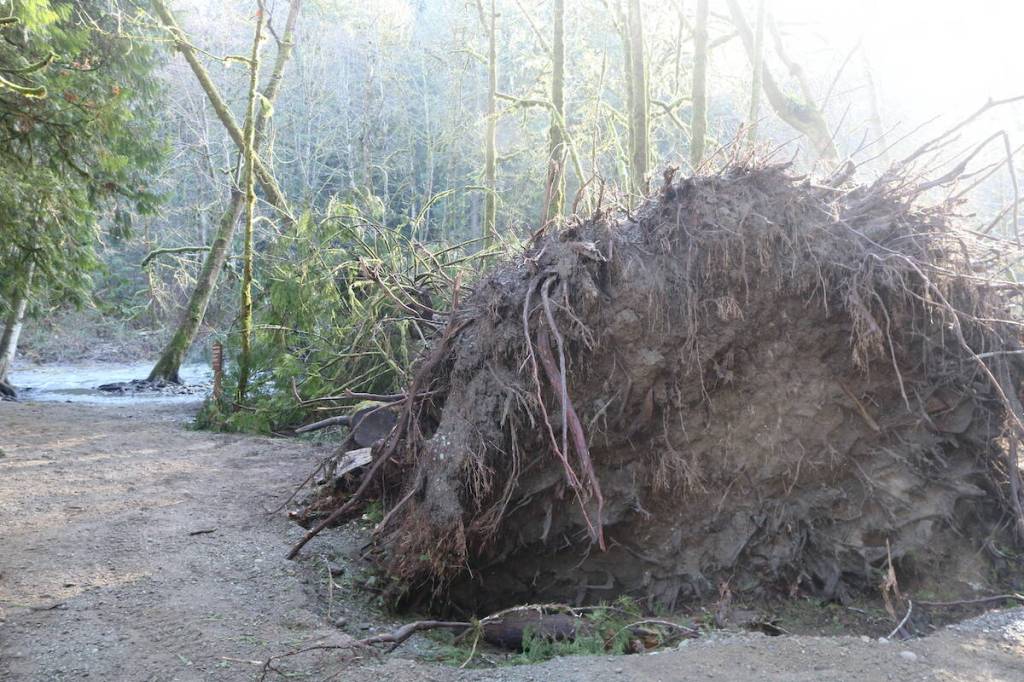
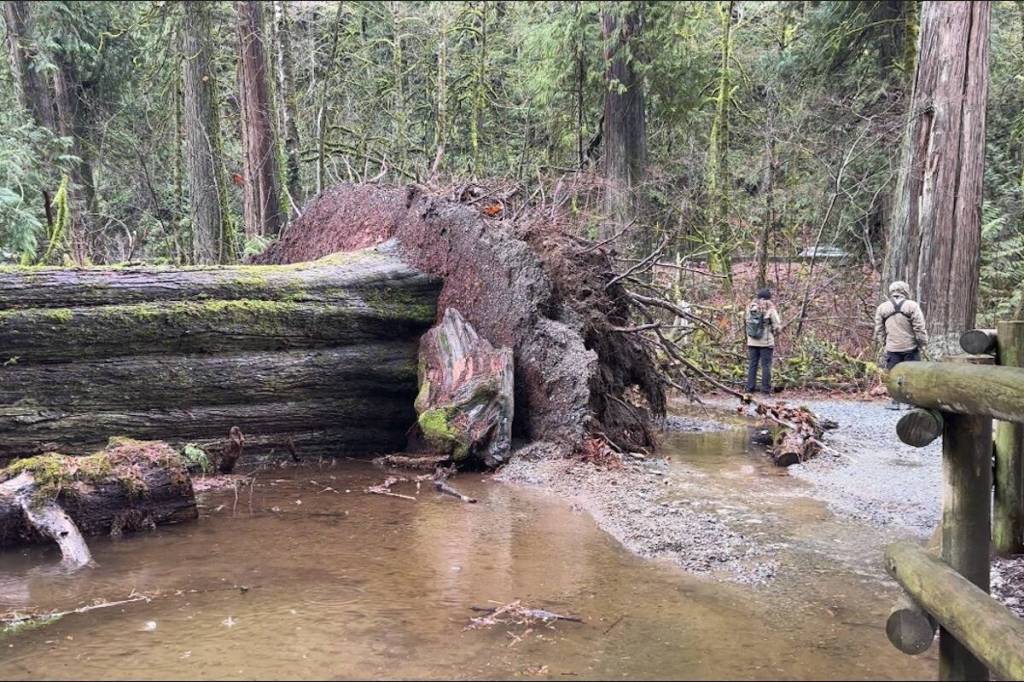


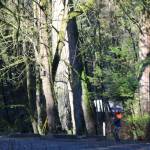
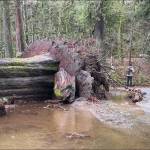
A fallen old-growth western redcedar tree in Goldstream Provincial Park will find new purpose – not on land, but in the river it once stood tall next to.
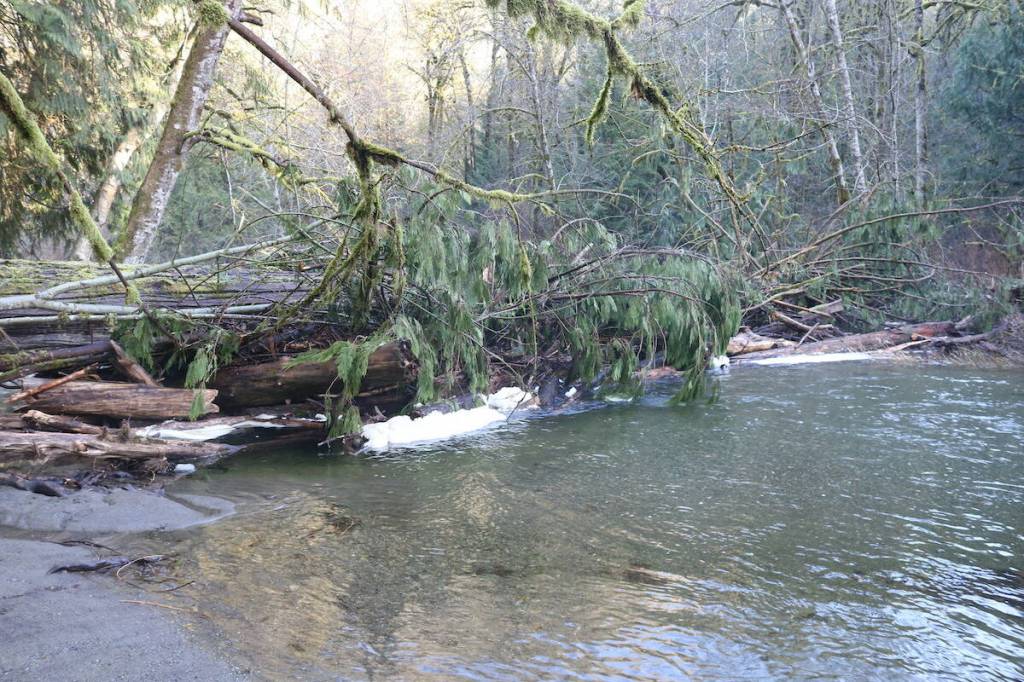
The toppled tree in the provincial park’s day-use area, located adjacent to the Trans-Canada Highway, will remain where it lies as large woody debris within the river system, creating natural habitat for salmon and other fish.
“Large in-stream wood improves salmon spawning and rearing habitat by slowing down water and allowing gravel to settle, providing protection and cover from predators, and cooling water temperatures,” said a spokesperson from the Ministry of Environment.
It also helps create habitat complexity, such as floodplains and pools, the ministry explained. The tree will also provide nutrients to the surrounding ecosystem.
“This tree fallen in Goldstream is unlikely to negatively impact salmon stocks and food supplies,” reassured the ministry. “In fact, large in-stream wood can increase habitat for aquatic invertebrates which salmon feed on.”
The tree fell in late December during a “significant weather event” that included flooding, saturated soils, and gusting winds, explained the ministry.
“With the exception of impacts to the trail, no people, property, or facilities were damaged,” they said.
The tree’s root system was identified as the most likely cause of the fall, with restricted root development, stress and decay listed as contributing factors. “And flooding with prolonged soil saturation associated with the recent storm system compromised overall root stability,” the ministry added.
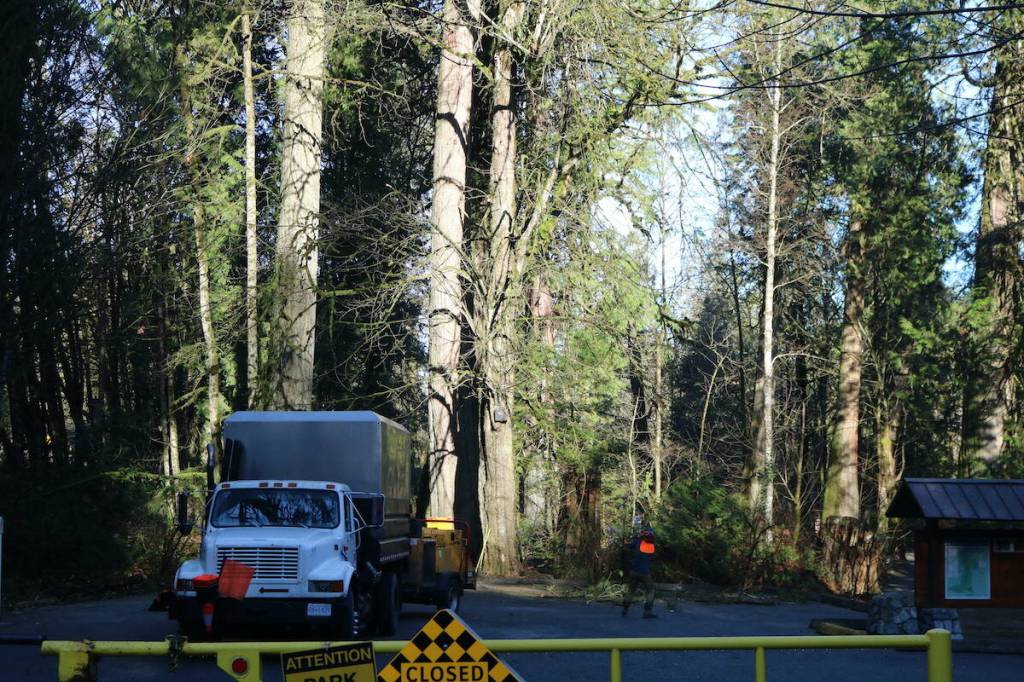
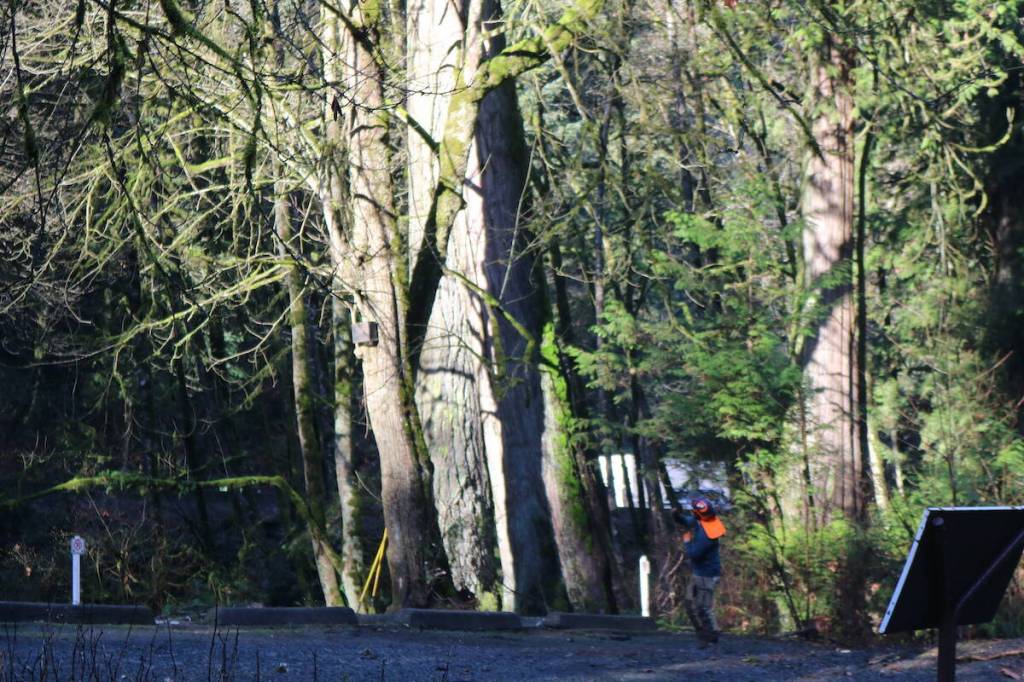
After the fall, a contractor was hired to perform a ‘danger tree assessment’ of the fallen tree and surrounding trees within the Goldstream day-use area. Because of safety concerns, the park’s day-use area was closed to the public while mitigation work was underway.
According to a person on site Wednesday (Jan. 21), during last month’s atmospheric river events, the tree caused water to be redirected into and flood the day-use picnic area and washrooms.
The flooding caused some structural damage to some picnic benches, which have now been repaired. The washrooms have also been cleaned up.
The BC Parks’ website says the day-use area reopened Friday (Jan. 23).
However, the trail to Niagara Falls remains permanently closed following a geotechnical engineering assessment that identified the area as high risk to public safety.
For updates, visit: bcparks.ca/goldstream-park.